

Why Hollywood Pays $10,000 for a Cinema Lens
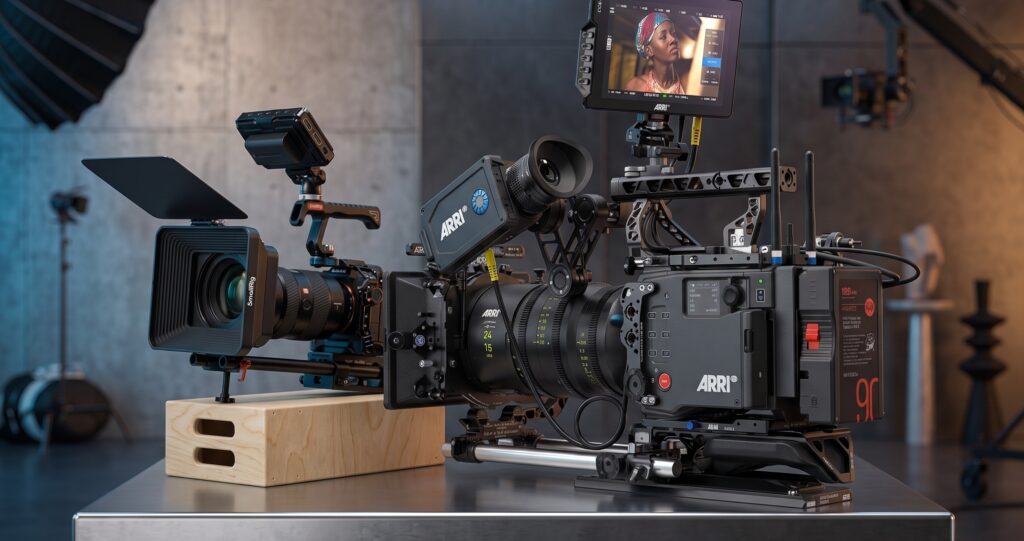
Every aspiring filmmaker eventually experiences the “price tag shock.”
You purchase a top-tier flagship mirrorless camera, maybe drop $2,000 on a premium “pro” photography lens, and feel like you’ve reached the summit. Then, out of curiosity, you look up the price of a proper Cinema Lens (Cine Lens) from brands like ARRI, Cooke, or Angénieux.
$10,000? $25,000? For a single 50mm lens?
The immediate beginner assumption is: “It must be ten times sharper,” or “The background blur must be magically creamier.”
But here is the harsh truth of the industry: Hollywood doesn’t pay for sharpness. In fact, many modern photography lenses are surgically sharper than highly sought-after vintage cinema glass. What the film industry actually pays for is absolute mechanical control and unique optical wizardry.
Let’s tear down the myths and look at the real engineering differences that separate a photography lens from true cinema glass.
The F-Stop Illusion vs. The T-Stop Reality (Absolute Exposure)
In the photography world, we worship the F-stop (f/1.4, f/2.8). But mathematically, an F-stop is just a theoretical calculation: the focal length divided by the diameter of the aperture. It tells you nothing about how much light is lost as it travels through the dozen pieces of glass inside the lens barrel.
Cine lenses don’t care about theory; they care about reality. They use T-Stops (Transmission Stops).
A T-stop is the actual, physically measured amount of light that hits the camera sensor. Why does Hollywood demand this? Imagine a cinematographer shooting a dialogue scene. They switch from a 35mm T2.8 lens for a wide shot to an 85mm T2.8 lens for a close-up. Because they are T-stops, the exposure will match flawlessly. If they used photography lenses set to f/2.8, one lens might secretly be darker than the other, creating an absolute nightmare for the colorist trying to match the shots in post-production.
The Silent Distraction: Defeating "Focus Breathing"
Grab your camera, put on a standard photography lens, and quickly manually focus from an object right in front of the lens to infinity. You will likely notice the edges of the frame expanding or contracting slightly. The lens appears to “zoom” in or out as it focuses.
This is called Focus Breathing.
For a photographer taking a single still image, this is completely irrelevant. But in cinema, pulling focus from a foreground character to a background character is a psychological tool to guide the audience’s eye. If the entire frame subtly “zooms” during this transition, it distracts the viewer and shatters the cinematic illusion.
Cine lenses are packed with complex, heavy internal compensating optics designed to eliminate focus breathing completely. The frame remains dead still, while only the plane of focus moves.
The Mechanical Ballet: Ergonomics for the Crew
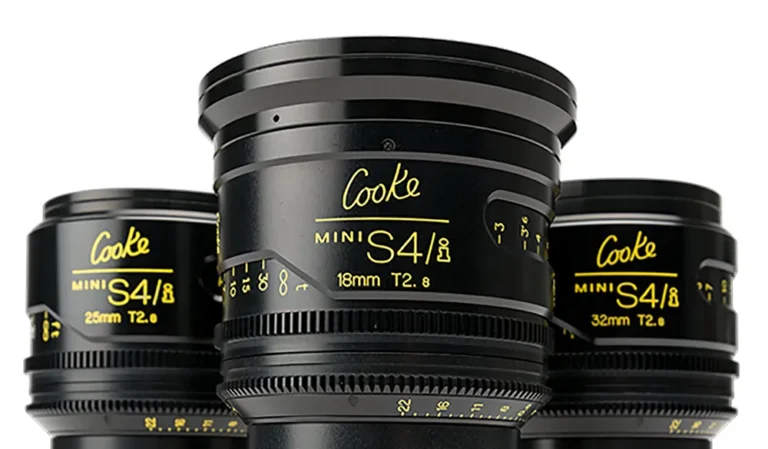
A photography lens is designed for one person: the photographer. A cine lens is designed for a team.
- The 300-Degree Throw: Photo lenses with autofocus have tiny, hyper-sensitive focus rings. A tiny nudge shifts the focus by meters. Cine lenses feature massive focus rings with nearly 300 degrees of rotation. This allows the 1st AC (Focus Puller) to hit exact, minute focus marks on a moving actor without overshooting.
- Stepless Iris: Cine lenses have “de-clicked” aperture rings, allowing the cinematographer to smoothly and silently adjust exposure during a live take without the jarring “jumps” of a clicking photo lens.
- Unified Gear Positions: Every lens in a premium cine “prime kit” (from 18mm to 135mm) has its focus and iris gears in the exact same position, and shares the exact same front diameter. When the crew calls for a lens swap, they don’t have to rebuild the matte box or adjust the follow-focus motors. On a Hollywood set where time is literally thousands of dollars per minute, this uniformity is priceless.
The Anamorphic Magic: Shaping the Widescreen Dream
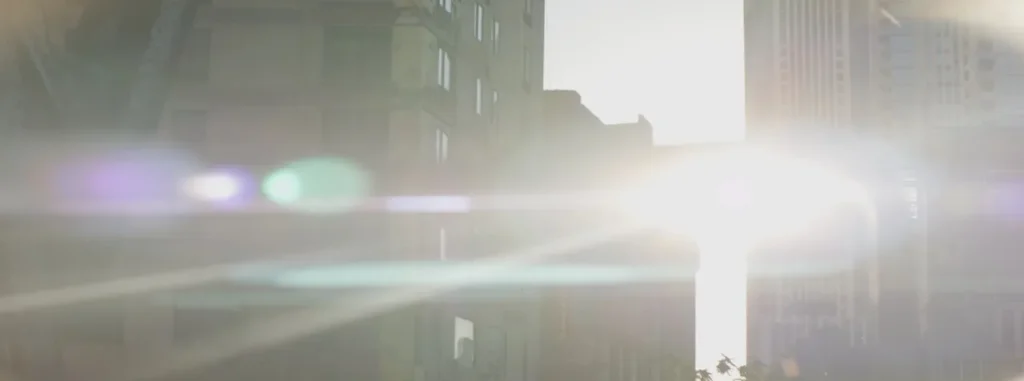
Beyond mechanical control, cine lenses offer something standard spherical photo lenses cannot: the optical magic of Anamorphic Lenses.
Anamorphic cine lenses literally “squeeze” an ultra-wide horizontal field of view onto a standard sensor. In post-production, this squeezed footage is “de-squeezed” (stretched back out). This process yields that epic 2.39:1 widescreen aspect ratio without having to crop the top and bottom of your footage, utilizing every pixel of the sensor.
But the true magic lies in the optical artifacts this squeezing creates. It produces the iconic oval bokeh (out-of-focus highlights shaped like tall ellipses) and those dramatic, horizontal lens flares that streak across the screen (a signature of directors like J.J. Abrams). These are organic cinematic textures that a standard photography lens simply cannot replicate.
The Solo Creator's Reality: Where Photo Lenses Win
So, is the cine lens the undisputed king? Not at all. If you are a solo content creator, a documentary filmmaker, or a run-and-gun videographer, high-end cinema glass will actually destroy your workflow. This is where modern photography lenses deliver their own form of “dominance”:
- Alien-Level Autofocus: Traditional cine lenses are 100% manual. If you don’t have a dedicated Focus Puller, you are in trouble. Modern photo lenses utilize insanely fast, AI-driven Eye-AF tracking that is practically flawless for solo gimbal operators or vloggers.
- Optical Image Stabilization (OIS): Cine lenses almost never have built-in stabilization (they belong on heavy tripods or Steadicams). Photo lenses often feature OIS that, when paired with your camera’s IBIS, makes handheld shooting incredibly smooth.
- Weight and Size: A cine lens is a heavy brick of metal and complex glass. Trying to balance a set of them on a handheld gimbal is a nightmare. Photo lenses offer a compact, lightweight footprint essential for the modern hybrid creator.
Conclusion: Mindset Over Mount
Do you need a $10,000 cine lens to shoot a masterpiece? Absolutely not. Some of the most stunning indie films of the last decade were shot on standard photography glass.
However, understanding why cine lenses are built the way they are is a masterclass in professional cinematography. It forces a mindset shift. It moves your brain away from obsessing over “sharpness” and pushes you to think about exposure consistency, optical texture, and the precise mechanical control of the viewer’s attention.
At ME Studio Academy, our philosophy is simple: Master the control of light and motion first. Once you have the vision, you’ll know exactly which tool—be it a $1,000 photo lens or a $10,000 cine lens—is the right one to bring it to life.