The Cheap Truth Behind the 24fps “Cinematic Look”: A Compromise of Celluloid Costs
08/06/2026
Share
A Compromise of Celluloid Costs
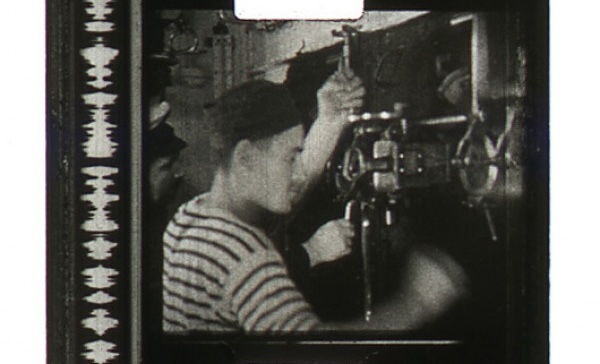
That tiny optical audio track on the edge of the film strip not only ended the silent era but permanently locked in 24fps as the absolute minimum frame rate to save studios money. (Image from internet)
Many beginners, upon getting their first mirrorless or cinema camera, immediately dive into the menu to switch the recording format from 30fps to 24fps. It’s as if locking in this magical number automatically injects a “Hollywood cinematic look” into their footage.
Countless gear reviews and beginner tutorials praise 24fps as the “pinnacle of human visual aesthetics.”
But the truth is remarkably cruel. When Hollywood established this standard, they knew nothing about human visual psychology, nor did they care about high-end aesthetics. To the studio executives of that era, only one thing mattered: Saving money.
The Hand-Cranked Era: A Frame Rate Blind Box
If we go back over a century to the silent film era (think early Charlie Chaplin comedies), there was absolutely no universal frame rate standard in the film world.
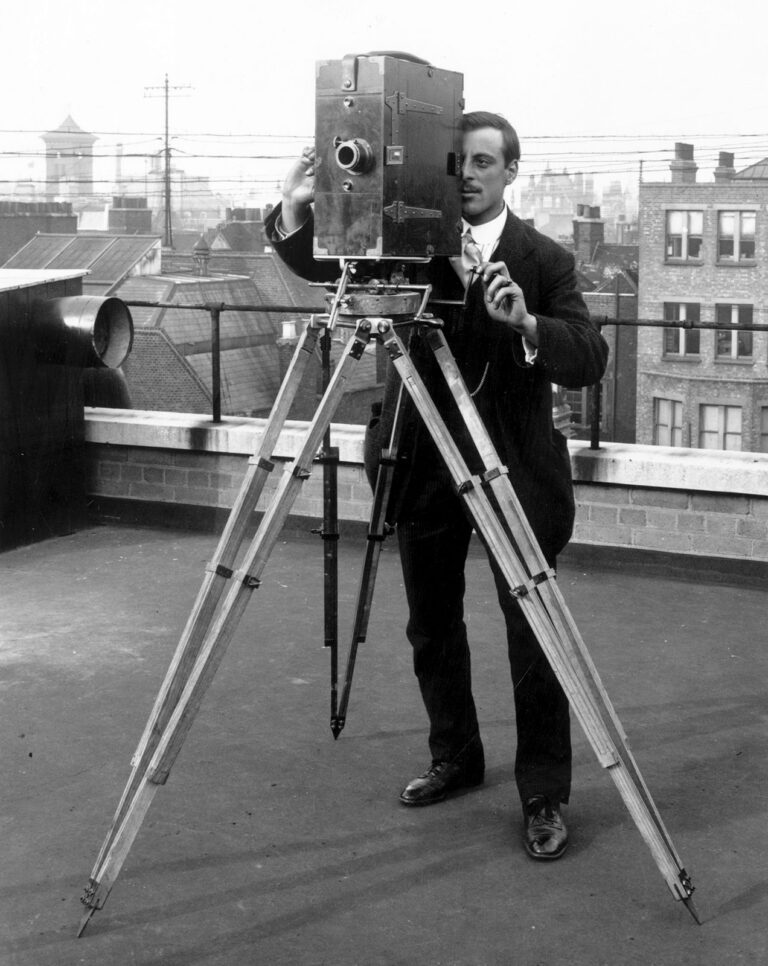
Cameras back then lacked electric motors; they were entirely hand-cranked by the cinematographer. For a slow, emotional scene, the cameraman would crank slower (around 16fps); for a tense chase, they would crank faster. This is why when we watch century-old archival footage today, people seem to be walking in fast-forward—the modern projectors (running at a constant 24fps) are playing the film much faster than the cameraman originally cranked it.
Back then, frame rate wasn’t a science; it was a gamble based on hand speed.
In the motor-less silent era, the frame rate was entirely dictated by the cameraman's hand speed, leading to the comical "fast-forward" look of early cinema.
(Image from internet)
The Sound Era's Calculation: The Accountants' Victory
In the late 1920s, “talkies” (sound films) emerged, abruptly ending the hand-cranked era.
Early cinema sound was recorded directly onto the edge of the film strip as an optical audio track. This meant the film had to run through the projector at an absolutely constant speed. If you tried hand-cranking it, the lead actor’s voice would warp like a broken synthesizer—shifting from a deep baritone to a squeaky chipmunk.
Since an electric motor was now mandatory to unify the speed, what should the frame rate be?
The Baseline Test: Audio engineers discovered that if the film ran too slowly (like the silent era’s 16fps), the audio quality was abysmal—mostly static and unintelligible dialogue.
The Cost Ceiling: The faster the film ran (like 30fps or higher), the better the sound and the smoother the motion. However, celluloid was incredibly expensive! Real 35mm film cost a fortune. Running just one extra frame per second would burn through hundreds of thousands of dollars a year for a major studio.
So, the studio bosses locked their engineers and accountants in a room. After meticulous calculations, they arrived at a remarkably stingy conclusion: 24fps.
It was the absolute “minimum baseline” that allowed the audio to sound legible and the motion to not look terribly choppy. The so-called “cinematic look” was, in reality, a compromise bowing to the cost of celluloid.
The Magic of 1/48s: Motion Blur Born from Poverty
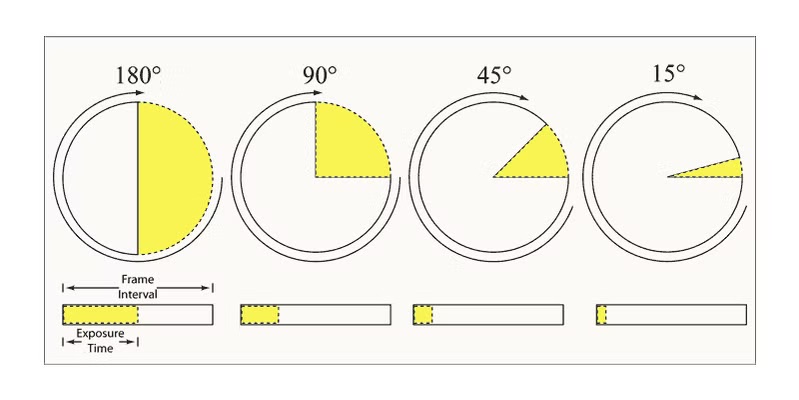
Because the entire industry was rigidly locked into 24fps, cinematographers were forced to use a 180-degree shutter angle (which translates to a shutter speed of 1/48th of a second, often substituted with 1/50s today) to maintain proper exposure.
Locked at 24fps, cinematographers had to rely on a 180-degree shutter angle (1/48s). It was the resulting "motion blur" from this compromise that conditioned human visual aesthetics for a century.(Image from internet)
At this relatively slow shutter speed, capturing any moving subject (like a waving hand or a speeding car) produces a distinct “Motion Blur.” It is precisely this slight blur and smearing between frames that forces our brains to “fill in the gaps” to perceive continuous motion.
A century of conditioning has hardwired a subconscious reflex into the human genome: 24 frames with motion blur equals premium, dream-like cinema; perfectly smooth, blur-free motion equals cheap reality.
Why 60fps Looks Like a "Cheap Soap Opera"
If you try shooting a short film at 60fps, no matter how beautiful your color grading is, the audience will likely feel disconnected. This is widely known as the Soap Opera Effect.
For half a century during the television era, only cheap indoor soap operas, live sports, and evening news used high frame rates (like the NTSC 30fps/60i standard).
When director Ang Lee shot Gemini Man and Billy Lynn’s Long Halftime Walk at an astonishing 120fps, the technology was flawless, but the hyper-smooth, blur-free imagery shattered the “dream-like distance” between the audience and the film. It was too real—so real that it felt like watching behind-the-scenes documentary footage, stripping away the poetic illusion of cinema.
Conclusion: Beyond the Frame Rate Obsession
Understanding the slightly impoverished origins of 24fps isn’t meant to make you abandon it, but to break the blind superstition surrounding camera specs.
In our practical courses at ME Studio Academy, we constantly emphasize to our students: A true cinematic look is never achieved just by dialing in a frame rate. It comes from your three-dimensional shaping of light, your precise control of lens compression, and your absolute mastery of blocking and scene direction.
24fps is merely a canvas left behind by history; what makes the painting invaluable is always the artist holding the brush.